 AlgoPress
Appearance
1634-求两个多项式链表的和
https://leetcode.cn/problems/add-two-polynomials-represented-as-linked-lists
多项式链表是一种特殊形式的链表,每个节点表示多项式的一项。
每个节点有三个属性:
coefficient:该项的系数。项 9x4 的系数是 9 。 power:该项的指数。项 9x4 的指数是 4 。 next:指向下一个节点的指针(引用),如果当前节点为链表的最后一个节点则为 null 。 例如,多项式 5x3 + 4x - 7 可以表示成如下图所示的多项式链表: 
多项式链表必须是标准形式的,即多项式必须 严格 按指数 power 的递减顺序排列(即降幂排列)。另外,系数 coefficient 为 0 的项需要省略。 给定两个多项式链表的头节点 poly1 和 poly2,返回它们的和的头节点。 PolyNode 格式: 输入/输出格式表示为 n 个节点的列表,其中每个节点表示为 [coefficient, power] 。例如,多项式 5x3 + 4x - 7 表示为: [[5,3],[4,1],[-7,0]] 。
示例 1: 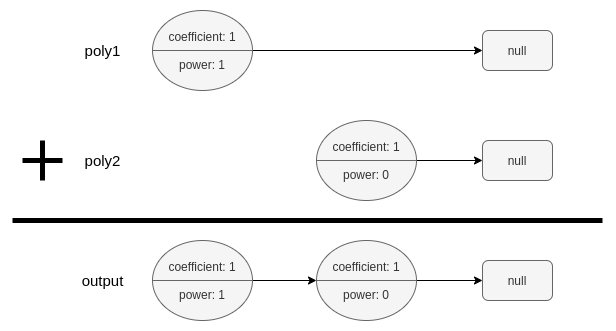
输入:poly1 = [[1,1]], poly2 = [[1,0]]
输出:[[1,1],[1,0]]
解释:poly1 = x. poly2 = 1. 和为 x + 1.
示例 2:
输入:poly1 = [[2,2],[4,1],[3,0]], poly2 = [[3,2],[-4,1],[-1,0]]
输出:[[5,2],[2,0]]
解释:poly1 = 2x2 + 4x + 3. poly2 = 3x2 - 4x - 1. 和为 5x2 + 2. 注意,我们省略 "0x" 项。
示例 3:
输入:poly1 = [[1,2]], poly2 = [[-1,2]]
输出:[]
解释:和为 0。我们返回空链表。
提示:
0 <= n <= 10^4
-10^9 <= PolyNode.coefficient <= 10^9
PolyNode.coefficient != 0
0 <= PolyNode.power <= 10^9
PolyNode.power > PolyNode.next.power
思路
- 设置 dummyHead
- 两个多项式从前往后计算,如果指数相等才进行系数和运算
- 如果系数最后的结果是0,则去掉该节点
参考代码
csharp
public class Solution {
    public PolyNode AddPoly(PolyNode poly1, PolyNode poly2) {
        PolyNode dummyHead = new PolyNode();
        PolyNode cur = dummyHead;
        while(poly1 != null && poly2 != null){
        	PolyNode node = new PolyNode();
        	if(poly1.power == poly2.power){
        		node.coefficient = poly1.coefficient + poly2.coefficient;
        		node.power = poly1.power;
        		poly1 = poly1.next;
        		poly2 = poly2.next;
        	}
        	else if(poly1.power > poly2.power){
        		node.coefficient = poly1.coefficient;
        		node.power = poly1.power;
        		poly1 = poly1.next;
        	}
        	else{
        		node.coefficient = poly2.coefficient;
        		node.power = poly2.power;
        		poly2 = poly2.next;
        	}
        	//如果系数不为0
        	if(node.coefficient != 0){
        		cur.next =node;
        		cur = cur.next;
        	}
        }
        //添加最后的节点
        if(poly1 != null){
        	cur.next = poly1;
        }
        if(poly2 != null){
        	cur.next = poly2;
        }

        return dummyHead.next;
    }
}